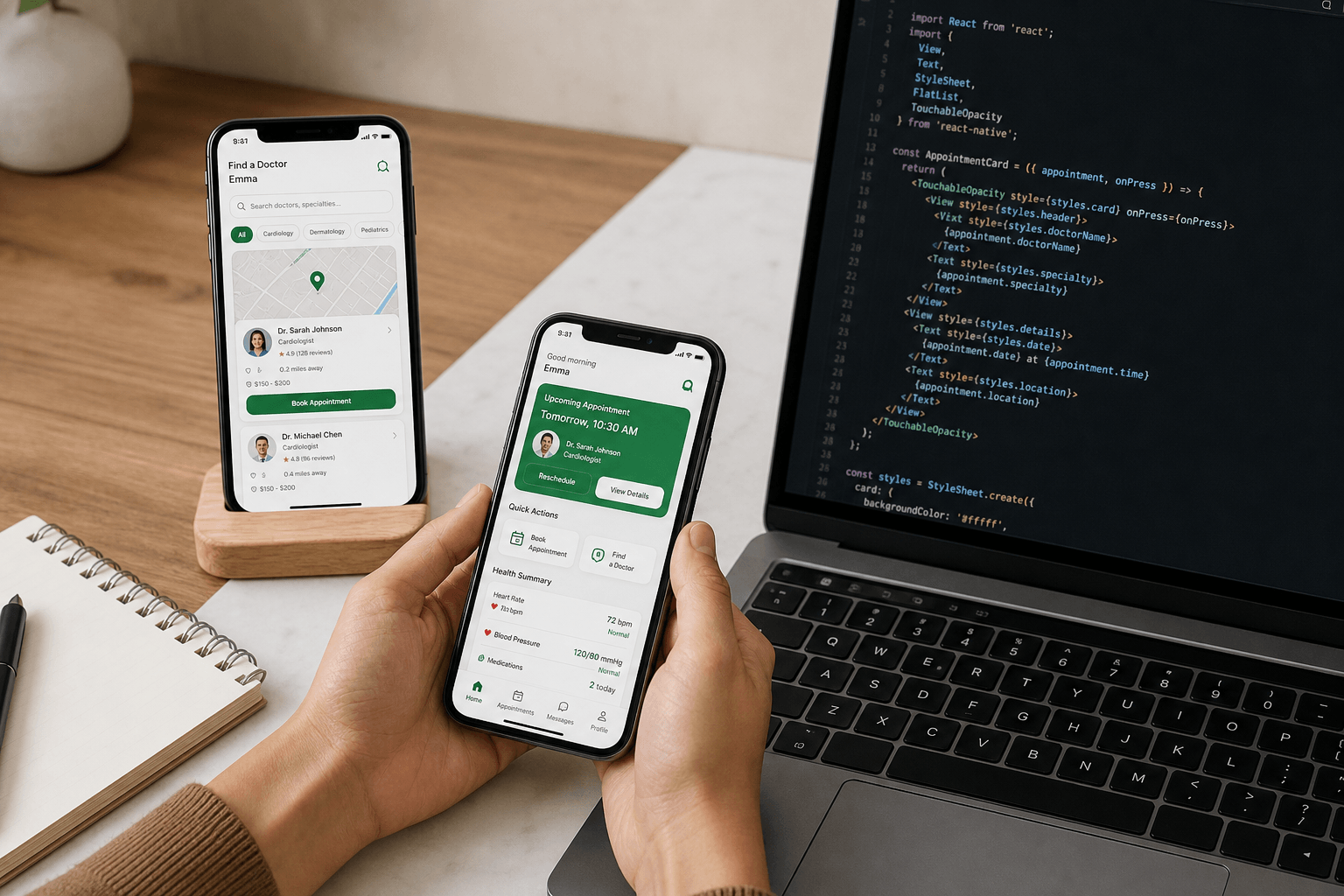
Mobile Apps
Mobile is a product, not a screenshot of the website. We design flows for thumbs, wire APIs for poor networks, and stay through store review and the first real users.
- iOS & Android
- Offline-Ready UX
- Store-Ready Release
What we set up
Store-ready Android and iOS apps with analytics, crash reporting, and a backlog for v1.1.
Product Discovery
Flows and prototypes designed for thumbs — not desktop screenshots.
Cross-Platform Build
React Native implementation for both stores from one team.
Backend APIs
Node.js or Laravel APIs owned with the mobile release.
CI & Test Tracks
Builds, test tracks, and store assets before launch day.
Push & Deep Links
Notifications, analytics, and deep links that survive OS updates.
Post-Launch Support
Retainer path for OS changes, store policy, and API drift.
End-to-End Delivery Lifecycle
From core build and cloud deployment to creative launch assets — every milestone under one contract.
02. Deployment & Cloud Cutover
03. Launch Assets & Automation
Frequently Asked Questions
Clear details on scope, stack ownership, credential handling, and post-launch support.
Do you build separate native Android and iOS apps?
React Native covers most product apps. When a feature truly needs fully native work, we isolate it rather than splitting the entire product.
Will you maintain the app after launch?
Yes. OS updates, store policy, and API changes are why retainers exist. We offer them as standard.
Do you publish to both App Store and Play?
Yes. We prepare store assets, builds, and compliance checks, then guide or submit under your developer accounts.
Can the app share APIs with our website?
That is the default. One backend contract for web and mobile keeps releases aligned and cheaper to maintain.
How do you handle offline or weak networks?
We design critical flows with local state, retries, and clear empty states so field teams are not blocked by a dropped connection.
Who owns the store listings?
You do. Accounts, certificates, and listing content stay under your organisation.