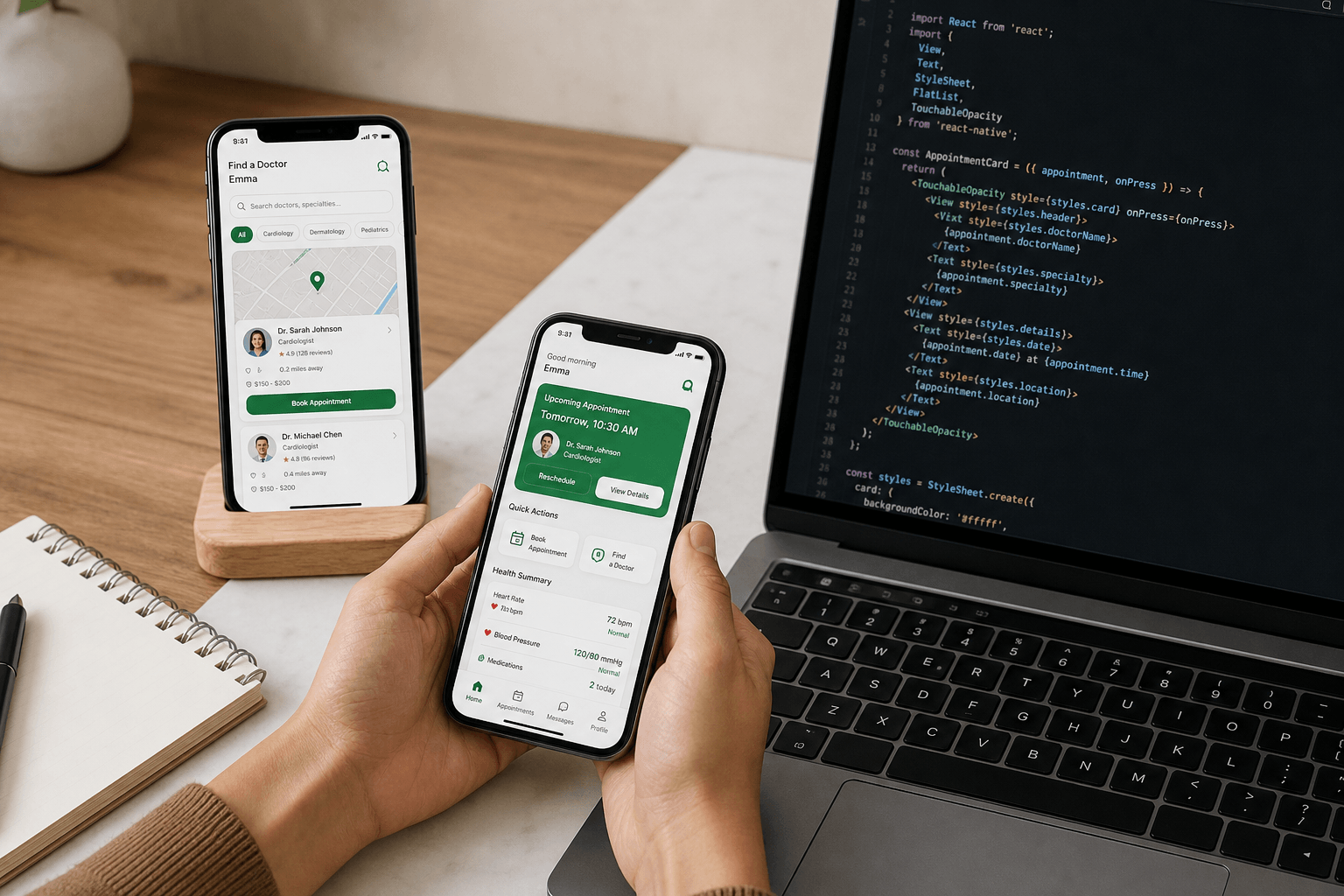
Progressive Web Apps
Not every product needs two store listings on day one. A PWA can ship installable, mobile-first experiences from the same web stack — with a path to React Native when stores become mandatory.
- iOS & Android
- Offline-Ready UX
- Store-Ready Release
What we set up
An installable web app with service-worker caching where it helps, and a clear handoff if you later need native stores.
Installable shell with app-like
Installable shell with app-like navigation
Offline-tolerant booking and read
Offline-tolerant booking and read flows
Push where the browser
Push where the browser and OS allow it
Shared API with future
Shared API with future React Native apps
End-to-End Delivery Lifecycle
From core build and cloud deployment to creative launch assets — every milestone under one contract.
02. Deployment & Cloud Cutover
03. Launch Assets & Automation
Frequently Asked Questions
Clear details on scope, stack ownership, credential handling, and post-launch support.
When do you recommend a PWA instead of React Native?
When distribution can start on the web, budgets are tight, or store review is not yet required. We say so plainly in the proposal.
Can a PWA become a native app later?
Yes. We keep the API and domain model shared so React Native reuses the backend.
Do you publish to both App Store and Play?
Yes. We prepare store assets, builds, and compliance checks, then guide or submit under your developer accounts.
Can the app share APIs with our website?
That is the default. One backend contract for web and mobile keeps releases aligned and cheaper to maintain.
How do you handle offline or weak networks?
We design critical flows with local state, retries, and clear empty states so field teams are not blocked by a dropped connection.
Who owns the store listings?
You do. Accounts, certificates, and listing content stay under your organisation.